

If you have naturally curly, coily, thick or frizz-prone hair, finding the right straightening tool can be challenging.
Perhaps your hair takes longer to straighten than you'd like, you struggle with frizz, or you're unsure whether a traditional flat iron or heated straightening brush would work better for your texture.
With so many hair styling tools available, it's easy to feel overwhelmed.
The good news is that different straightening tools are designed to achieve different results, and understanding those differences can help you make a more informed decision.
At HairMakeUpandBeauty.com, we believe great hair styling starts with choosing products that work for your individual hair rather than trying to change what makes it unique.
In this buying guide, we'll compare straightening brushes and flat irons, explain how they work on different hair textures and introduce two tools worth exploring.
1. Why Can Curly and Textured Hair Be More Challenging to Straighten?
Not all hair responds to heat in the same way.
Hair texture can vary significantly, from loose waves and spiral curls to tightly coiled patterns.
Your hair's density, porosity, condition and natural curl pattern can all affect how easily it straightens and how long a particular style lasts.
For example, thicker or denser hair may require more sectioning, while bleached or chemically treated hair can be more vulnerable to heat damage.

Beauty Tip
Before choosing a straightening tool, think about your desired result.
Do you want to reduce frizz while keeping some natural volume, or are you hoping to create a sleek, pin-straight finish?
The answer can help you decide which appliance is most suitable.
2. What Is a Heated Hair Straightening Brush?
A heated straightening brush combines a brush-like design with heated styling elements.
Unlike a traditional flat iron, which presses hair between two heated plates, a straightening brush uses a brushing motion to help smooth and stretch the hair.
This can make it appealing for people who prefer a familiar styling technique.
Straightening brushes can be particularly useful for creating a softer, smoother appearance without necessarily removing all natural body and movement.

Advantages of a Straightening Brush
-
Familiar brush-through styling technique.
-
Can help create smoother-looking hair.
-
May retain more natural volume than a very sleek flat-iron finish.
-
Can be convenient for everyday styling.
-
Some models offer adjustable temperatures.
Potential Disadvantages
-
May not achieve a fully straightened finish on tightly coiled hair.
-
Requires dry, carefully detangled hair unless the manufacturer specifies otherwise.
-
Can be less effective on some root areas or shorter sections.
-
Still exposes hair to heat.
Beauty Tip
Divide your hair into small, manageable sections before using a heated straightening brush.
Start with a lower appropriate temperature and gently guide the brush through each section without excessive pulling.
Never force the brush through knots or hold its heated surface against one area for too long.
Shop the Tool: PARWIN Ion Hair Brush Straightener
If you prefer a straightforward brushing technique, the PARWIN Ion Hair Brush Straightener could be worth exploring.
Its keratin-coated comb teeth, negative ion technology and adjustable heat settings are designed to support heat-assisted smoothing and straightening.
The brush may appeal to people who want to reduce the appearance of frizz and create a straighter-looking finish while retaining some natural body.

SHOP THE TOOL
PARWIN Ion Hair Brush Straightener
Heated Straightening Brush
£35.36
Smooth and straighten hair using a familiar brushing motion. Features keratin-coated comb teeth, negative ion technology and four adjustable heat settings.
Shop Now →
3. What Is a Traditional Flat Iron?
A traditional flat iron uses two heated plates to straighten hair as you move the appliance through each section.
The plates apply heat and pressure to reshape the hair temporarily, helping create a smoother and straighter appearance.
Flat irons are popular for achieving sleek styles and can be particularly useful when a more defined straightened finish is the goal.

Advantages of a Flat Iron
-
Can produce a sleek, polished straightened finish.
-
Allows controlled styling of individual sections.
-
May be more effective for tightly curled hair when used correctly.
-
Suitable models can also create bends and waves.
-
Different plate widths suit different lengths and styling preferences.
Potential Disadvantages
-
Hair is exposed to heated plates.
-
Excessive temperatures and repeated passes can contribute to damage.
-
Requires careful sectioning and technique.
-
Styling thick or dense hair can take time.
Beauty Tip
A higher temperature doesn't automatically produce a better result.
Choose an appropriate setting for your hair's condition and work through manageable sections.
Avoid repeatedly straightening the same section and never use conventional flat irons on wet hair unless the manufacturer specifically approves wet styling.
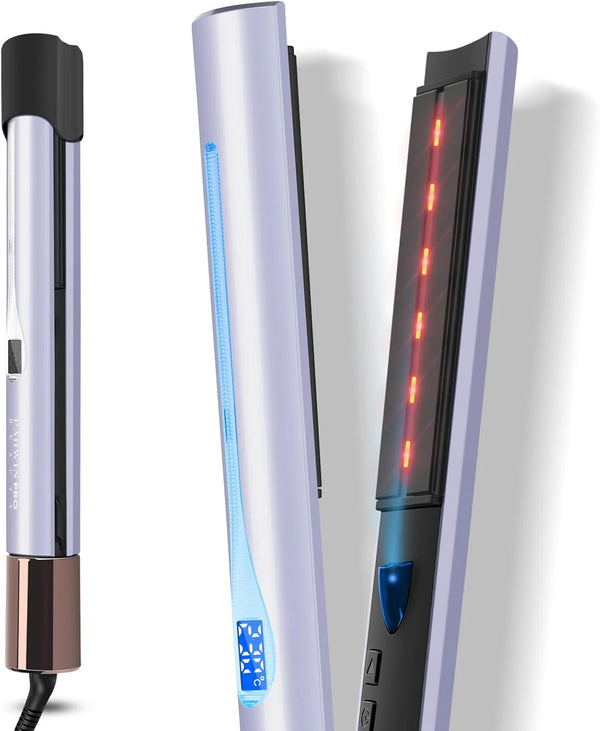
Shop the Tool: Infrared Ion Hair Straightener
If your goal is a sleeker, more defined straightened hairstyle, the Infrared Ion Hair Straightener is an option to consider.
This traditional plate-style tool offers a different approach to straightening compared with a heated brush.
SHOP THE TOOL
Infrared ion Hair Straightener
Traditional Flat Iron
£32.50
Create a sleek, smooth finish with infrared heat, negative ion technology and 25mm floating ceramic plates designed for shinier, less frizzy-looking results.
Shop Now →
4. Straightening Brush vs Flat Iron: What's the Difference?
Both appliances are designed to help smooth and straighten hair, but they use different techniques.

| Feature | Straightening Brush | Flat Iron |
|---|---|---|
| Styling method | Heated brushing motion | Heated plates |
| Finish | Often softer and more voluminous | Often sleeker and straighter |
| Ease of use | Familiar brushing technique | Requires controlled sectioning |
| Frizz smoothing | Yes | Yes |
| Tight curls and coils | May stretch and smooth | Often more effective for sleek results |
| Natural volume | Can retain some body | Can create a flatter finish |
| Styling near roots | Depends on brush design | Depends on plate shape |
| Heat damage risk | Possible | Possible |
| Best for | Everyday smoothing | More defined straightening |
Neither tool is automatically better for everyone.
The right choice depends on your natural texture, styling preferences, hair condition and the results you want to achieve.
5. Which Straightener Is Best for Your Hair Type?
Wavy Hair
If you have naturally wavy hair, a heated straightening brush may be sufficient to create a smoother appearance while retaining some movement.
A flat iron may be preferable if you want a particularly sleek finish.
Our suggestion: Consider a straightening brush for softer everyday smoothing.
Curly Hair
Curly hair can vary enormously in density, pattern and condition.
A straightening brush may help stretch and smooth some curl patterns, while a flat iron may provide greater control when creating a straighter finish.
Our suggestion: Choose according to your curl pattern and preferred result rather than assuming one tool suits all curly hair.
Tightly Coiled or Afro-Textured Hair
Tightly coiled hair may require more preparation and careful sectioning.
A heated straightening brush can help stretch or smooth some textures, but may not create the same sleek finish as a flat iron.
Our suggestion: If your goal is a pin-straight style, a suitable flat iron may be more effective, but avoiding excessive heat remains important.
Thick or Dense Hair
Dense hair often takes longer to style because there are more strands to work through.
Both tools can be suitable, although sectioning and temperature control become especially important.
Our suggestion: Consider your preferred finish, styling time and the tool's size and settings.
Fragile, Bleached or Damaged Hair
Hair that is already fragile can be more vulnerable to further heat damage.
Neither a straightening brush nor a flat iron should be considered a damage-free solution.
Our suggestion: Reduce unnecessary heat styling, choose appropriate lower settings and prioritise conditioning and gentle handling.
6. How to Straighten Textured Hair More Safely
Achieving a smooth-looking hairstyle begins before switching on your straightener.

Step 1: Start With Clean, Dry Hair
Unless your appliance is specifically approved for wet styling, make sure your hair is completely dry.
Step 2: Detangle Gently
Work through knots using a suitable detangling brush or comb.
For tightly curled or coily hair, detangling in sections can help reduce unnecessary tension and breakage.
Step 3: Apply Heat Protection
Use a heat-protection product suitable for your hair and styling appliance.
Follow the directions and allow your hair to dry completely before using a dry-hair straightener.
Step 4: Divide Your Hair Into Sections
Use styling clips to separate your hair into manageable sections.
This can make it easier to work methodically without repeatedly styling the same strands.
Step 5: Choose an Appropriate Temperature
Start with a lower effective heat setting and adjust cautiously if necessary.
Fine, colour-treated or damaged hair may require particular care.
Step 6: Style Slowly and Carefully
Move your straightening brush or flat iron through each section at a controlled pace.
Avoid unnecessary repeated passes and keep heated surfaces away from your skin.
Step 7: Finish and Maintain
Once your hair has cooled, you can apply a suitable lightweight finishing product if desired.
Remember that maintaining healthy-looking hair is more important than achieving a perfectly straight appearance.
Beauty Tip
If your hair requires repeated high-temperature styling to achieve a particular result, consider whether a softer, less heat-intensive finish might better suit your current hair condition.
7. Which Should You Buy? Our Recommendation
Choosing between a straightening brush and a flat iron ultimately comes down to the hairstyle you want to achieve.
Choose a Straightening Brush If:
-
You prefer a familiar brushing motion.
-
You want to smooth hair while retaining some natural volume.
-
You enjoy softer straightened hairstyles.
-
Your routine focuses on convenient everyday smoothing.
Our featured choice: PARWIN Ion Hair Brush Straightener.
Choose a Flat Iron If:
-
You prefer a sleek, defined straightened hairstyle.
-
You want more control when straightening individual sections.
-
You're styling tightly curled hair and want a straighter result.
-
You enjoy creating polished finishes with heated plates.
Our featured choice: Parwin Infrared Ion Hair Straightener.
Neither tool guarantees a particular result, and both should be used carefully to minimise avoidable heat damage.
Shop Hair Straighteners for Your Routine
Whether you prefer the convenience of a heated straightening brush or the controlled styling of a traditional flat iron, finding a suitable appliance can make your routine easier.
At HairMakeUpandBeauty.com, explore our selection of straightening brushes, traditional flat irons and other styling tools designed for different hair types and styling goals.


